Your engine works hard every day, and oil is its lifeblood. Without the right amount of clean oil, friction increases, parts wear faster, and your engine’s performance can drop dramatically. Checking engine oil regularly is a simple habit that can prevent costly repairs and keep your car running smoothly.
In this guide, we’ll walk you through the step‑by‑step process of checking engine oil, explain what the readings mean, and share tips to make the process easy and accurate—even for beginners. And if you ever prefer professional assistance, a reliable Oil Change Houston service can help ensure your engine stays properly maintained.
Why Checking Engine Oil Matters
A quick oil check today saves big repairs tomorrow.
Engine oil lubricates moving parts, reduces heat, and keeps your engine clean. Over time, oil can get dirty or leak, reducing its effectiveness. Neglecting to check oil can lead to:
- Increased engine wear and friction
- Reduced fuel efficiency
- Overheating or even engine damage
Regularly checking your oil ensures you catch low levels or degraded oil before it causes problems. If you’re unsure when to check or notice irregularities, a trusted Oil Change Near Me service can provide professional guidance and help keep your engine in top condition.
Step 1: Park on Level Ground and Turn Off the Engine
Safety first—your engine will thank you.
- Find a flat, level surface to park your car. This ensures an accurate oil reading.
- Turn off the engine and let it cool for at least 5–10 minutes. Hot oil can burn your hands and give inaccurate readings.
Level ground and a cooled engine are critical because oil needs time to settle in the oil pan for an accurate measurement.
Step 2: Locate the Dipstick
The dipstick is your engine’s health check.
- Open your car’s hood and look for the oil dipstick—it usually has a bright handle labeled “Engine Oil.”
- Consult your owner’s manual if you’re unsure where it is.
The dipstick is a simple tool that tells you both the oil level and condition, helping you decide if a top-up or oil change is needed. If you’re ever uncertain about readings or notice unusual signs, a trusted Auto Repair Near Me can help inspect your engine and ensure everything is in proper working order.
Step 3: Check the Oil Level
Reading your oil is easier than you think.
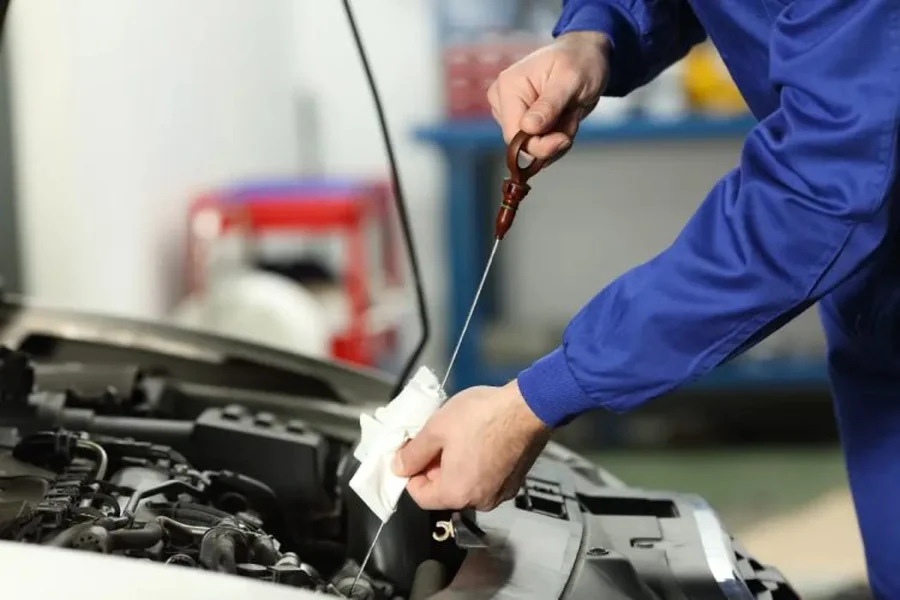
- Pull the dipstick out and wipe it clean with a rag or paper towel.
- Reinsert the dipstick fully, then pull it out again to check the oil level.
- Compare the oil mark to the “Full” and “Low” indicators on the stick.
Pro Tip: Check the level when the engine is cold for the most accurate reading. If it’s near or below “Low,” it’s time to top up or change the oil.
Step 4: Examine Oil Condition
Color and texture reveal your engine’s story.
- Look at the oil on the dipstick:
- Golden or amber: Healthy oil
- Dark brown or black: Old oil, may need changing
- Milky or foamy: Possible coolant leak—seek professional help
- Golden or amber: Healthy oil
- Rub a little oil between your fingers. It should feel smooth, not gritty.
This quick check tells you if your oil is doing its job or if it’s time for an oil change. Regular checks help you catch early signs of contamination or degradation.
Step 5: Add Oil If Needed
Top it off, don’t overfill.
- Remove the oil filler cap (usually labeled “Engine Oil”).
- Using a funnel, add the recommended type and quantity of oil (check your owner’s manual).
- Recheck the level with the dipstick after adding a small amount, repeating until the level is correct.
Tip: Overfilling can damage your engine seals and reduce performance, so add oil gradually.
Step 6: Clean Up and Dispose of Waste Properly
Keep your engine—and the environment—happy.
- Wipe up any spilled oil with a rag.
- Safely store leftover oil for proper disposal at a recycling center or auto shop.
Proper handling protects both your car and the environment from potential damage caused by oil spills.
Common Mistakes to Avoid
Checking Oil When the Engine is Hot or Running
Reading the oil while the engine is running or too hot can give inaccurate measurements. Always let your engine cool for a few minutes and check on level ground for a precise reading.
Ignoring Irregular Oil Color or Consistency
Oil that looks unusually dark, gritty, or milky can signal engine problems or contamination. Paying attention to these signs helps catch issues before they become serious.
Using the Wrong Oil Type or Viscosity
Using oil that doesn’t match your manufacturer’s specifications can reduce lubrication efficiency and harm engine performance. Always follow your owner’s manual recommendations.
Overfilling Oil
Adding too much oil can damage engine seals, cause leaks, or reduce performance. Always add oil gradually and recheck the dipstick to reach the proper level.
Keeping these points in mind ensures your DIY oil checks are safe, accurate, and effective, helping you maintain a healthy engine.
Tips for a Smooth Oil Check
- Always consult your owner’s manual for recommended oil type and intervals.
- Use clean rags or paper towels to avoid introducing dirt into the engine.
- Check oil levels regularly—ideally once a month or before long trips.
Keep Your Engine Running Smoothly
Checking your engine oil is a simple task that can save you from major headaches down the road. By regularly monitoring oil level and condition, you not only protect your engine from wear and tear but also improve fuel efficiency and overall performance.
Even small issues like low or dirty oil can snowball into costly repairs if ignored. Making oil checks a part of your routine—whether you do it yourself or get help from a professional—ensures your car runs reliably and efficiently. Consistent care keeps your engine healthy, extends the life of your vehicle, and gives you confidence every time you get behind the wheel.
